
The Power of Knowing Your Why by Melissa Morriss-Olson
She Leads the Way: What Women Leaders Teach Us About the Leadership Higher Education Needs Now
The first of seven short pieces drawn from conversations on the IngenioUs podcast. I’ve talked with more than thirty women presidents and senior leaders in higher education, and a few ideas kept surfacing no matter who was in the conversation. This series is where I gather them.
At the end of a season, I like to stop and ask what I took from it. Not the talking points, but the things that genuinely changed how I think. This year that was harder than usual. There was a lot to sort through. But when I sat with the transcripts, the same handful of ideas kept coming back, the ones that surfaced almost regardless of who was speaking or what kind of institution she led. Over the next six pieces I want to walk through them. Taken together they’re the closest thing I have to a through-line across these conversations, and they add up, I think, to a portrait of the kind of leadership this moment in higher education asks for.
I’ll start where so many of the conversations themselves seemed to start; with purpose. And the first surprise was that hardly any of these women had set out to become a president at all.
We tend to picture the people in those offices as careful planners who mapped the route early and climbed it rung by rung. That isn’t the story I kept hearing. Most of these women weren’t chasing the title at all. They took the work that mattered to them, said yes when they thought they could be useful, and looked up years later to find themselves running a college. What moved them wasn’t ambition exactly. It was purpose.
That has stuck with me, because it cuts against how we usually talk about leadership, and because it seems to matter more, not less, in a moment when so little about higher education feels stable. If one idea ran through all of these conversations, it’s that knowing why you lead may be the steadiest thing a leader has.
The Empty Space on the Wall
Lori White, president of DePauw University, told me a story that gets at this better than I can summarize it. She never pictured herself as a college president. Her path ran the way many of these women did, one opportunity at a time, with mentors along the way nudging her toward rooms she wouldn’t have walked into on her own.
The turn came during her presidential search visit. Touring campus, she ended up in a room hung with portraits of DePauw’s past presidents, none of whom looked anything like her. And then she noticed the empty space on the wall where the next portrait would go.
“When I saw that blank space, a voice from above, literally said to me, Lori, they’re going to offer you that job. And when they offer it to you, you’re going to say yes. You’re going to say yes not for you. You’re going to say yes because it’s important for future generations of DePauw University to know that somebody who looks like you can be president of DePauw.”
After that, the job wasn’t a job anymore. I heard a version of that shift over and over in these conversations: the women I found most compelling were rarely after the prestige of the office. They wanted to use it for something.
Saying Yes to the Work
The same thing came up with leader after leader: the job grew out of service, not out of wanting the job.
Mary Dana Hinton, president of Hollins University, spent years crossing sectors, from elementary education to philanthropy to nonprofit work to higher education, before she could see what tied it together. “I was compelled more by the desire to create and support educational equity than by a single title or single industry. I just want young people to be able to get an education.” That’s the part I find worth sitting with. Purpose often only becomes legible in the rearview mirror. A career that looks scattered while you’re living it can turn out to have been pointed in one direction the whole time. For Hinton it was educational equity, not any particular rung, that had been doing the steering. It changed how she saw the presidency too: “I didn’t aspire to be a college president. The title is lovely. But that’s not what drew me to this work. The mission, the work itself, drew me to it.”
Susana Rivera-Mills, president of Aurora University, came at it from a different life but landed somewhere similar. Her family came to the U.S. during the Salvadoran Civil War, and her early goals had nothing to do with a presidency: “I did not set out to become a president. I had one very simple goal, and that is that I wanted to be able to help my parents financially.” Like a lot of first-generation students and immigrants, she started with something close and concrete, helping her family, and watched it widen over time. By the point she became Aurora’s first Latina president, she understood it as bigger than her own arrival: “I see it as an incredible privilege and responsibility to be able to portray that and be an example of that and pave the way for others who will come after me.”
It kept recurring. Elizabeth Meade, president of Cedar Crest College, put her whole career in one sentence: “I really have spent my entire career saying yes to opportunities where I felt that I could make a difference.” Rhona Free, president of the University of Saint Joseph, traced her sense of purpose back to the people who had bet on her as a first-generation student and immigrant, which settled into a plain operating principle: “If you have any question about a student, it’s always better to bet on the student.” Different people, different starting points, different institutions, and yet the same order underneath: the purpose came first, and the role grew up around it.
What Holds Up Under Pressure
Purpose doesn’t just tell a leader where to go. It helps once they’re there and the ground keeps shifting. Cynthia Teniente-Matson, president of San José State University, was as clear on this as anyone I spoke with. A first-generation college graduate who has led through budget crises, reorganizations, and plenty of public scrutiny, she keeps coming back to one question: what is your purpose? “It’s really important to understand your personal purpose, and the personal purpose that connects with the role that you have.”
I keep thinking about how useful that is right now. The pressures on a president today, enrollment, money, political crossfire, technology, the workforce, a public that keeps moving the goalposts, rarely resolve into an obvious right answer. What purpose gives you is a way to sort them: a filter for which decisions actually matter, and something to hold onto when a stretch gets genuinely hard. That’s why these women talked about it the way they did, not as a nice-to-have but as the thing that keeps leadership from becoming pure reaction.
The Through Line
The longer I listened, the more I came to think purpose isn’t something a leader locates once and then files away. It’s the thread that runs through the whole life. Helene Gayle, president of Spelman College, showed me that as plainly as anyone. Her résumé reads like several different careers: medicine, public health, the CDC, the Gates Foundation, CARE, the Chicago Community Trust, and now one of the most influential historically Black colleges in the country. Put those side by side and they look unrelated. Gayle doesn’t see them that way. “The through line has always been, how can I help further equity and social justice?” The organizations and the titles kept changing; the question underneath them never did. It’s the same question that brought her to Spelman: “I really was drawn to this role, because I felt like it was the chance for me to give back to the next generation of young women who I hope will continue to make a difference in our world.”
If there’s a single thing I’d take from these conversations, it’s that. Leadership, for these women, wasn’t finally about reaching a position. It was about answering a question, the one Gayle kept asking in different words: what difference are you here to make? They each arrived at their own answer by their own route, through hardship or service or a mentor or family or some door that happened to open. But once they had it, it organized everything after. Mary Dana Hinton said it as advice: “Believe in your mission. Commit yourself to that mission and what matters for you.” In a stretch like this one, when higher education badly needs leaders who can stay steady and keep moving, I’m not sure there’s a more useful thing to know. The ones who last, as far as I can tell, aren’t the ones chasing power. They’re the ones who never quite lose the thread.
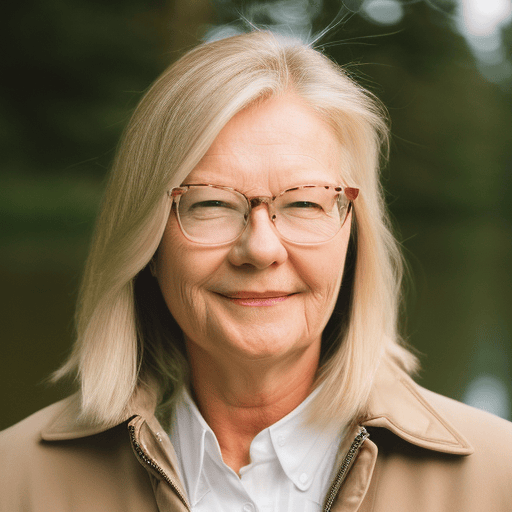
Dr. Melissa Morriss-Olson is a distinguished leader in higher education with over 35 years of experience shaping innovation and fostering institutional excellence. Currently leading the launch of The American University of Greece Global Campus, she is also Distinguished Professor of Higher Education Leadership at Bay Path University. During her tenure as Provost, she launched over 40 academic programs and secured over $6 million in grant funding. She is the author of several influential works, including IngenioUs Leadership: Creating Solutions to Wicked Problems in Higher Education.