
University Design | Underemployment by David J. Staley
The core argument in Peter Turchin’s book “End Times” is that social and political upheaval results from what he identifies as “elite overproduction.” Looking throughout history, Turchin claims that:
when a state such as the United States has stagnating or declining real wages (wages in inflation-adjusted dollars), a growing gap between rich and poor, overproduction of young graduates with advanced degrees, declining public trust and exploding public debt, these seemingly disparate social indicators are actually related to each other dynamically. Historically, such developments have served as leading indicators of looming political instability. In the United States, all of these factors started to take an ominous turn in the 1970s. The data pointed to the years around 2020 when the confluence of these trends was expected to trigger a spike in political instability. And here we are. (xi)
Turchin traces earlier moments of political crisis, finds the same underlying causes for each and so makes the claim that ours is a moment ripe for instability.
The centrality of “elite overproduction” to his model is what draws my particular attention. “The social pyramid has grown top heavy,” he writes
we now have too many “elite aspirants” competing for a fixed number of positions in the upper echelons of politics and business. In our model, such conditions have a name: elite overproduction. Together with popular immiseration, elite overproduction and the intraelite conflicts that it has engendered, has gradually undermined our civic cohesiveness, the sense of national cooperation, without which states quickly rot from within. (xiv)
Bloomberg News recently reported that of all those who are unemployed in the United States, nearly 25% hold a four-year degree. This is not an anomaly or some after effect of pandemic lockdowns. The data reveals that the trend line has been rising for nearly 20 years. It is hard to resist the temptation to draw that trend line forward and anticipate even more degree holders joining the ranks of the unemployed in the near future.
But an even more telling statistic is the number of “underemployed” college graduates. Underemployment means that a person holds a job, but that job does not usually require a four-year degree, or that the skill set necessary to perform the job is well below the training of the worker. A college graduate working full-time as a barista would be underemployed. “Underemployment is a large and persistent problem,” according to the authors of the 2024 report “Talent Disrupted:”
In spite of a historically tight labor market, the underemployment of college graduates remains stubbornly high. Overall, 52 percent of graduates are underemployed a year after graduation. Even a decade after graduation, 45 percent of graduates are underemployed.
The Federal Reserve Bank of New York published these statistics, identifying the underemployment rate for graduates by discipline:
| Major | Underemployment Rate | |
| Agriculture | 42.4 | |
| Animal and Plant Sciences | 53.2 | |
| Environmental Studies | 49.0 | |
| Architecture | 30.8 | |
| Ethnic Studies | 47.7 | |
| Communications | 52.3 | |
| Journalism | 35.7 | |
| Mass Media | 47.3 | |
| Advertising and Public Relations | 34.1 | |
| Information Systems & Management | 28.5 | |
| Computer Science | 16.5 | |
| General Education | 22.8 | |
| Early Childhood Education | 22.1 | |
| Elementary Education | 16.1 | |
| Secondary Education | 23.0 | |
| Special Education | 18.9 | |
| Miscellaneous Education | 16.0 | |
| General Engineering | 28.2 | |
| Aerospace Engineering | 18.8 | |
| Chemical Engineering | 16.5 | |
| Civil Engineering | 20.2 | |
| Computer Engineering | 17.0 | |
| Electrical Engineering | 19.5 | |
| Industrial Engineering | 16.8 | |
| Mechanical Engineering | 19.4 | |
| Miscellaneous Engineering | 28.1 | |
| Foreign Language | 51.1 | |
| Family and Consumer Sciences | 39.8 | |
| English Language | 48.6 | |
| Liberal Arts | 56.5 | |
| Biology | 45.6 | |
| Biochemistry | 44.4 | |
| Miscellaneous Biological Science | 49.0 | |
| Mathematics | 24.3 | |
| Interdisciplinary Studies | 48.4 | |
| Nutrition Sciences | 46.8 | |
| Leisure and Hospitality | 54.5 | |
| Philosophy | 41.2 | |
| Theology and Religion | 42.9 | |
| Chemistry | 40.6 | |
| Earth Sciences | 40.5 | |
| Physics | 35.0 | |
| Miscellaneous Physical Sciences | 39.7 | |
| Psychology | 45.4 | |
| Criminal Justice | 67.2 | |
| Public Policy and Law | 53.9 | |
| Social Services | 31.8 | |
| Anthropology | 55.9 | |
| Economics | 31.9 | |
| Geography | 38.7 | |
| Political Science | 50.6 | |
| Sociology | 54.4 | |
| General Social Sciences | 54.1 | |
| Construction Services | 21.3 | |
| Art History | 46.9 | |
| Fine Arts | 53.4 | |
| Performing Arts | 62.3 | |
| Commercial Art & Graphic Design | 34.7 | |
| Health Services | 42.7 | |
| Medical Technicians | 57.9 | |
| Nursing | 9.7 | |
| Pharmacy | 16.5 | |
| Treatment Therapy | 37.7 | |
| General Business | 52.8 | |
| Accounting | 17.9 | |
| Business Management | 51.3 | |
| Business Analytics | 27.2 | |
| Marketing | 44.8 | |
| Finance | 31.5 | |
| International Affairs | 38.5 | |
| History | 51.2 | |
| Engineering Technologies | 40.1 | |
| Miscellaneous Technologies | 55.6 | |
| Overall | 38.3 |
Sources: U.S. Census Bureau, American Community Survey (IPUMS); U.S. Department of Labor, O*NET.
Unsurprisingly, nursing had the lowest underemployment rate, just 9.7%. And disciplines that we might expect, such as in the humanities had rates as high as the upper 40% range. Criminal justice has a 67.2% rate. But Biology and Biochemistry—which I would assume were more practical, job-ready majors—have underemployment rates of about 45%. General business has a rate near 53%. (I do not know if these data include 2-year degree holders.) Given these numbers, I wonder how we might define what an “acceptable” underemployment rate is.
Last year, the Bureau of Labor Statistics released data on the largest occupations in the United States by category, and the results were startling:
- Home Health and Personal Care Aides 3,988,140
- Retail Salespersons 3,800,250
- Fast Food and Counter Workers 3,780,930
- General and Operations Managers 3,584,420
- Registered Nurses 3,282,010
- Cashiers 3,148,030
- Laborers and Freight, Stock, and Material Movers, Hand 2,982,530
- Stockers and Order Fillers 2,779,530
- Customer Service Representatives 2,725,930
- Office Clerks, General 2,510,550
Of these top 10, only two job categories– General and Operations Managers and Registered Nurses–require a college degree. I have looked at these numbers for Columbus, Ohio, the city in which I reside. Columbus is home to a major university which attracts talent from throughout the Midwest—really, the world—and with employers such as OhioHealth, Nationwide, Honda of America Manufacturing, and local, state and the federal government. I suspected that the largest occupations in Columbus would be those that required a degree. But this is not the case:
- Fast Food and Counter Workers
- Stockers and Order Fillers
- General and Operations Managers
- Registered Nurses
- Retail Salespersons
- Home Health and Personal Care Aides
- Laborers and Freight, Stock, and Material Movers, Hand
- Customer Service Representatives
- Cashiers
- Heavy and Tractor-Trailer Truck Drivers
Columbus’ occupation numbers nearly mirror the nation as a whole. I found a similar pattern in other cities. Only in San Jose could I find a city where the largest occupation (software development) required a college degree. Not New York, not Miami.
Here lies the roots of the underemployment problem: the economy does not produce enough jobs that utilize the talents of college graduates.
Note how I have phrased this: the fault for underemployment does not lie with those who go to college. The fault lies with the economy, the labor market, those providing the jobs. (And this is all before the impact of automation on the labor market.) Last year, the International Labour Organization, a UN agency, reported that the jobless rate for graduates in India was 29.1%; the rate for illiterates was only 3.4%. “The Indian economy has not been able to create enough remunerative jobs in the non-farm sectors for new educated youth labor force entrants, which is reflected in the high and increasing unemployment rate.” The ILO is suggesting that it is the Indian economy, not college graduates, that is responsible for underemployment. We could make a similar claim about the American economy.
Is underemployment a temporary problem that will dissipate once the labor market makes corrections? Or is underemployment a chronic feature of the American economy? If the latter, then one result will be a decline in the number of college seekers. We are already vexed by the problems of enrollment management and the “demographic cliff.” If the labor market continues to send the signal that the largest proportion of available jobs do not require college, young people might get the message and simply opt out of college attainment. Elite overproduction would no longer be a problem, and presumably the threat of social and political instability evaporates along with it.
The BLS data implies that we do not really understand the nature of the workforce and thus do not understand how workforce development should actually work.
We often hear politicians emote “we don’t need philosophy or gender studies graduates!” and “we need more plumbers and electricians!” But the BLS data tells a different story. The data seem to say we need food counter workers and retail salespersons.
No credible workforce development program would concentrate on training people to be baristas. There are no stackable certificates in cashiering, nor should there be.
What is the purpose of workforce development? Is it to prepare future workers for the job market as it is currently configured? Or is it the task of workforce development providers to anticipate the trends, to predict which jobs will be in demand in the future, and train workers for those potential jobs? Perhaps workforce development should be the practice of designing a desirable or preferred labor market. In this case, workforce development would mean engineering the economy to produce jobs that align with the skills of college graduates.
Perhaps this is a mission colleges and universities should undertake: to not only educate future workers, but to actively stimulate the economy in order to produce jobs that align with graduates’ skills. This does not mean colleges hiring their own graduates; it would mean the college would act as a catalyst, an incubator of high-skill economic development.
The purpose, the mission of the university would be to proactively combat underemployment.
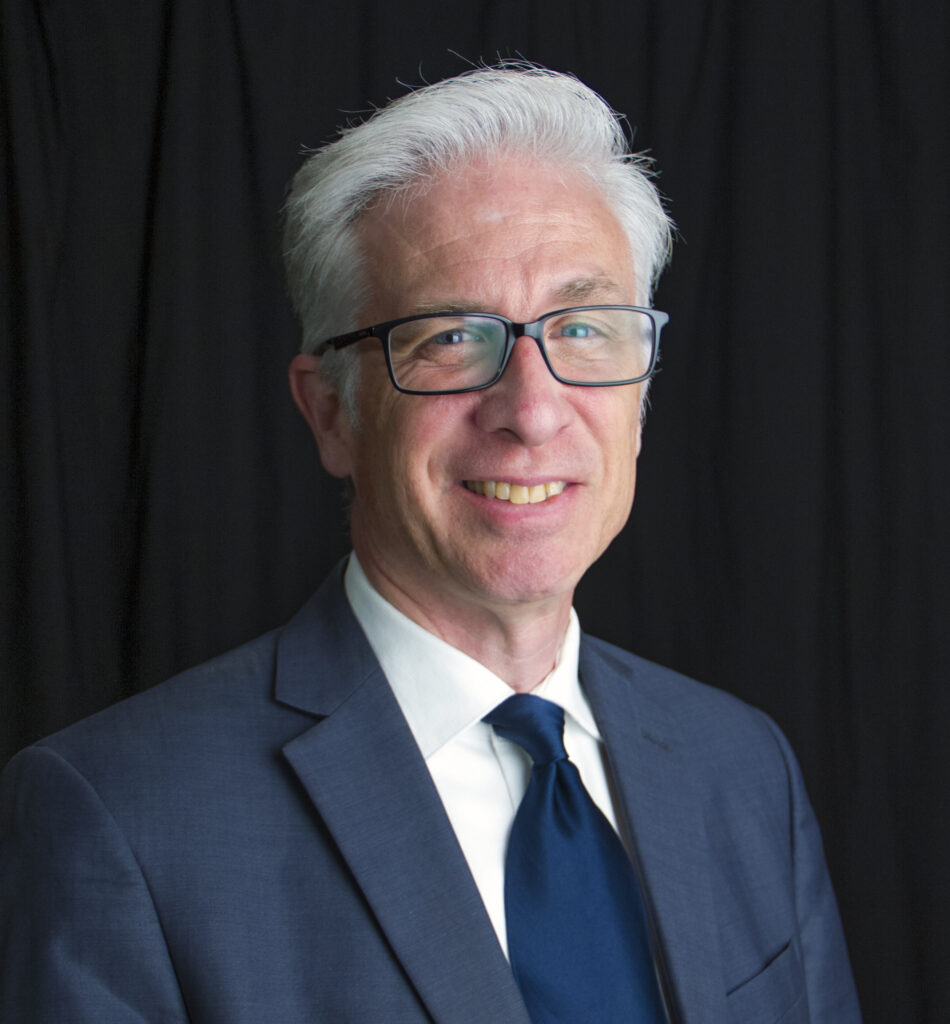
David J. Staley is a higher education philosopher, strategist, futurist, theorist and designer, and is an Honorary Faculty Fellow in Innovation at CHELIP. He is the author of Alternative Universities: Speculative Design for Innovation in Higher Education and the co-author of Knowledge Towns: Colleges and Universities as Talent Magnets.